

I love the osssttt so much I could die it’s the best thing so far in the show I keep listening to it God it’s sooo good it’s like so good listen to the ost yall it’s peak
Was this review helpful to you?
Good concept, messy execution where was the payback?
I liked Payback overall. Sun was an interesting character, the entertainment-industry setting had potential, and I really enjoyed his dynamic with Sky and the manager.But the writing left me with too many questions. The sexual exploitation plot was handled in a very exaggerated and sometimes outdated way, and several violent events happened without enough explanation. The pool scene especially made no sense to me: why exploit the boy and then suddenly have him killed? What made him a threat?
My biggest issue, though, is the title itself: where was the payback? I kept waiting for a clever, satisfying revenge plan, but it never really came. The villains mostly fell because of circumstances, the police, or sudden developments rather than Sun and Jay actually executing some great revenge.
It was still an enjoyable watch, but for a series called Payback, the actual payback was probably the weakest part.
Was this review helpful to you?
Season 1 - Watched it 6 years ago!!
Honestly, this was my first BL drama, and damn, was I hooked. The storyline, the characters, the romance, everything was awesome. It proved worthwhile watching it. Highly recommended if you are a BL fan. Was also my first Thai drama and so do not regret watching it. Still haven't watched season 2 but will soon!Was this review helpful to you?
Entertaining till the end...!!
it's been a while since i watched something really unique and entertaining from the start to end. i binged all the episodes at once because it was so much fun and it become more and more interesting by each episodes.Love the way koreans adapting the webtoons, actually they don't need so many stories, they can simply adapt from all the best webtoons and make it a total worth dramas. Here the story and screenplay is very simple and what makes it look worthy is the performance of the leads.. They were thoroughly entertaining and their premises itself is very refreshing.
Music is also one of the major highlight which i find very interesting. anyways nothing more to say.. Just Watch it..
totally worthy your time
Was this review helpful to you?
Best 2026 Thai bl
I love nouurrrrsoooo muchhhh arghhhh I don’t want to rant too much but tong from daouoffroad show was gaggy but he’s next level here I know we were all shipping him In DO show with that guy from horizon show but his chemistry with boss is MEANT TO BE it’s peak I love it sooo much they look so good together man I love it please go watch it you won’t regret it quote me anywhere best series out rn with you maniac but this is peakkkkkkkkkkBosstong forever
Was this review helpful to you?
1/10
definitely a miss with all the cut scenes. the only thing that was good about the series was the acting and that's it taking care for the storyline and the cut scenes. if the scene are going to be cut just don't put in the series at all then it's definitely not worth rewatching. the only episode worth watching is the first episode. it's rates a 1/10 for me I not going to watch it ever again. that my honest opinion on this bl. the only thing that was great is the actors in this bl. this series could have been better if the scenes was not cut.Was this review helpful to you?
This review may contain spoilers
Ridiculous in the best way
There is honestly nothing to review about Spring Fever. It’s ridiculous. The entire show is ridiculous. And I absolutely loved it.Even Ahn Bo-Hyun’s haircut is ridiculous, but somehow it feels perfectly appropriate because his character, Sun Jae-Gyu, is just as ridiculous. This man is out here lifting cars, bending iron bars, rescuing stray dogs, and generally behaving like a human version of a cartoon superhero. Absolutely chaotic.
Underneath all that intimidating, hard-ass exterior, Sun Jae-Gyu is also an absolute cutie patootie. He is basically a giant marshmallow pretending to be a terrifying man, and the contrast is ridiculously endearing. The man can look like he’s about to murder someone and then turn around and be the most precious idiot alive.
And then there’s Yoon Bom, who is not exactly the voice of reason either. She’s stubborn, strong-headed, smart, and incredibly insightful. She’s wounded and guarded, carrying more hurt than she lets on, but she’s still fighting. And when she allows herself to simply be herself, she’s hopeful, lively, and full of life. She has absolutely no filter and, instead of being put off by Jae-Gyu’s nonsense, she happily joins him in it.
The school festival scene alone had me questioning everything. Bom is so obsessed with winning that she goes down on her knees, practically begging to win, as if the school festival is some prestigious international championship that will determine the course of her life. And even then, she refuses to admit that she actually knelt. No. Her legs simply gave up. She was not kneeling. Ridiculous woman.
And I love whatever is wrong with this couple. They are SO good together. Their dynamic is just so damn cute. There is something incredibly satisfying about watching two people who seem to exist on the exact same wavelength. They understand each other, support each other, and build each other up, and somehow even their strangest, most ridiculous moments feel completely natural to them. They just naturally fit.
And the random things Jae-Gyu and Bom do?
Him taking his shirt off because the dog is cold and her pretending she isn’t swooning. Him doing an overhead press with the bench while Bom is sitting on it. Him chasing her around town with a chicken skewer. Her hiding from everyone by practically lying on top of him under a blanket during their disastrous first date
What was wrong with the person who wrote the show??!!
I mean that affectionately. I am not complaining. Please give me more.
The same can be said for pretty much everyone else in this town. The second male lead, Jae-Gyu’s nephew, his girlfriend, the townspeople… not a single person seems to have a functioning brain cell. They are all operating on their own unique wavelength of ridiculousness, and somehow it works.
And then there’s the small-town setting, which I will always have a weakness for.
Small-town dramas just hit differently. There’s something about the pace, the community, and the little everyday moments that creates this cosy, comfortable feeling. They somehow manage to feel healing without trying too hard to be. Spring Fever does exactly that.
It makes you laugh. It makes you fall in love with the characters. It makes you want to smack some of them occasionally. And, by the end, it makes you wish the show hadn’t ended and that you could stay in that little town a bit longer.
The first half was definitely my favourite because that’s where the show was at its most unhinged and lighthearted. But I was pleasantly surprised by the more serious turn in the second half. It handled the heavier parts well without becoming unnecessarily draggy or losing the warmth that made the show so enjoyable in the first place.
Also, I will forever love romcoms that end with proposals or weddings. Kdramas seemed to have forgotten this sacred tradition for a while, so I’m very happy to see us finally returning to our roots.
Ultimately, Spring Fever is not a show I can defend with logic.
I can only say: I loved it. I loved the ridiculousness. I loved the chaos. I loved this absolutely unhinged couple. I loved the town and all its equally unhinged residents. I loved everything about it.
I just finished watching it. How am I already thinking about a rewatch?
Was this review helpful to you?
Their best show
This is literally Joong dunk best show man I love it so much Joong and dunk chemistry has improved a lot and Firstkhao ?!!!! Peakkkkkkkkkk they’ll forever be gmm best cp nobody is coming close to them peak peak peak cinemaCan’t wait to their next show even tho I did find vat for cash a bit boring but nvm they’re still peak cp
Was this review helpful to you?
An incredible series let down by its ending
I genuinely loved The Edge of Horizon. It is one of those shows that gave me more than just entertainment. It actually made me interested in an older period of Thai history and pushed me to start reading and searching about the country, the political changes and the society of that era. When I later went to Thailand, I even visited the palace/filming location because of the series. Unfortunately, the palace itself was closed for renovation, but the café was open and I still got some beautiful pictures there. That alone says a lot about how much this series stayed with me.The acting was easily one of its strongest points. Inn and Ongsa were excellent, especially in the emotional scenes, and the supporting cast was just as strong. The production, atmosphere and historical setting made the story feel much bigger than a typical romance.
But then came the ending.
I really wish the writers had had the courage to let Phob die.
By that point, his death felt like the natural and necessary conclusion to the story. We watched everyone mourn him, there was a funeral, the rings were found beside him, Thin had accepted that the love of his life was gone, and the entire episode treated his death with enormous emotional weight.
Then, in the final minutes, Phob suddenly returns because villagers apparently found him and nursed him back to health.
It completely took me out of the story.
This was a romance taking place during an incredibly turbulent period, with revolution, class conflict and two men trying to love each other in 1930s Thailand. A tragic ending would not have felt cruel or unnecessary. It would have reflected the reality and turmoil the entire series had spent eleven episodes building toward. Phob's death would have made their love even more powerful to me — a love that existed despite a world that was simply not ready to allow them to live it freely.
Instead, it felt like the production wanted a happy ending at any cost and tried to satisfy everyone. Unfortunately, by doing that, they weakened what could have been an unforgettable ending.
And I say all of this as someone who absolutely loved the show. I would still give it a 9/10 and recommend it without hesitation. The story, performances and atmosphere were fantastic.
I just wish they had trusted their own story enough to let it end where it naturally wanted to end.
Was this review helpful to you?
This review may contain spoilers
That was disappointing...
Ups, I forgot to write a review for this, because I was so underwhelmed. While it started gritty and bloody, it fell off the cliff as soon as they made this story fully comedic in the beginning. This was the dumbest decision they could have made. This topic does not deserve any comedic elements. It got better over time, but then of course they had an lacorn style bad character.How this series could be nominated for any prices is beyond me, because this is just mediocre. It has bad parts and it has good parts but nothing really fitting or an overall concept. The actors are good, but that can't save the script. Camera angles are sometimes questionable, production quality bounces between very good and average.
So I have not much more to say other then this was disappointing. When writers have no time or/and no ideas how to tell a good story, they just gobble something together hoping that naked skin and nc-scenes will distract us from the bad script. At least it did not succeed with me. Just skip this and go to the grown up show "Shine" which has a detailed story, detailed characters, real emotions and no silly, inappropriate jokes.
Was this review helpful to you?
This review may contain spoilers
From my perspective, most of the cringe that ultimately drags the rating down—and which I honestly expect may make it drop even further—comes from the way certain things are delivered.There is, of course, the ever-present discussion around age gaps. Personally, I have no inherent problem with them in fiction. I can absolutely appreciate a relationship between someone in their twenties and someone in their forties. That is a much larger age gap than we are usually given between fictional characters, but for me, that is not inherently a problem. The fact that the characters' age difference is roughly comparable to the actors' ages is also an interesting detail.
My bigger problem is that the subjects this series deals with could have been presented in a much more tasteful and effective way. The material is there. The premise is there. The production quality is there. With this level of audiovisual quality, you could do genuinely amazing things with the storytelling. Instead, a lot of the connective tissue between the different plot points seems to be built around things that feel mismatched, misplaced, or simply cringe-inducing.
What particularly bothered me were the verbal explicit declarations or confirmations of love shown in situations sexually driven. Usually, BL does almost the opposite: there are love scenes dressed as sexual. Here, we repeatedly get declarations of love in situations where what actually is driving the characters is sexual desire.
Strangely enough, the love confirmations that you can take seriously (and are meant) are there too, but elsewhere. The emotional and verbal cues feel mismatched. The story tells us, “This is love,” while the actual scene can feel like, “This is sexual desire.” And then, elsewhere, it manages to communicate affection or love - mostly through action and decisions. That mismatch (...where love is actually just sex...) is one of the main sources of the cringe for me.
And that is where I started wondering whether the creators actually knew this was going to be such a heavily cringed series (it is always confusing to me as I would cross that message differently than I see). Because there is also a serious undertone, and the topics themselves could have been handled in a much more effective way. But the actual construction of the story—the way the different plot points are connected—is very often built around these mismatched, misplaced, cringe-inducing elements.
I can't quite tell whether there is some degree of awareness of how these topics are perceived, or whether the original source material itself is constructed and constricting in this way. It doesn't really feel self-aware enough for the cringe to be entirely intentional. At the same time, it sometimes feels as though the creators were aware of how this kind of material is perceived and therefore never fully committed to developing it in a way that could actually work.
What I do think is quite clear is that they weren't really trying to make this a sexy series.
And I mean that as an observation rather than a criticism.
The actors aren't presented primarily as objects designed to seduce the audience. The production doesn't seem interested in constantly pleasing the eye or pushing the audience toward a particular romantic or sexual response. It feels almost as though the actors are simply inhabiting their characters, moving through the story and hitting the required plot points, while leaving us completely free to feel whatever we happen to feel about them.
It isn't like those Thai BL series with extremely attractive, muscular men where the whole presentation is clearly designed to please the audience visually and make us fall in love with the characters. This series wasn't made to seduce us, either romantically or sexually, in the way that some of the hottest BL projects currently airing or recently finished very deliberately do.
And strangely enough, that is part of what makes my feelings about it so ambiguous.
Visually, I actually think the casting choices are striking and memorable. The actors' appearances are probably the strongest thing I am taking away from the series. I may not be able to tell you much about the plot several weeks from now, but I suspect I will remember what these actors looked like and the specific impression they created.
That is something I would compare directly with Unexpectedly Naughty Fukami (2026). I would consider the two projects to be of roughly comparable production quality, perhaps with some differences in how interesting the material is. Unexpectedly Naughty Fukagami had a more interesting and, to me, less explored premise, and yet I was much more obsessed with it.
With Unexpectedly Naughty Fukagami, I remember being genuinely invested in the project. Here, I mostly remember being intrigued, confused, or outright cringing at various points.
At the same time, I think this series has made more memorable choices when it comes to its actors and their visual identities. With Unexpectedly Naughty Fukagami, I remember the project itself more than I remember exactly what the actors looked like. Here, it is almost the reverse. I don't think I could reconstruct the plot in much detail beyond the standard age-gap premise and the fact that the older character apparently has a sad backstory—something I mainly remember because I have seen other people discussing it. But I can remember the actors.
So I am caught between wanting to be strict about this series and knowing that many other people are probably going to be strict about it already.
I wasn't impressed (as in - this is not a masterpiece, not even in the cringe or lecherous department). I cringed at quite a few places. I don't think this is a gem from any perspective I can apply to it.
But at the same time, if I stop analyzing it intellectually and look at it more emotionally, I can somehow feel that this was someone's little baby. It feels like people genuinely tried very hard to make this work. And perhaps they knew from the beginning that they were starting from a much more difficult position than many other stories, even with the same level of professionalism or production quality.
And because of that, judging it purely on everything that went wrong feels almost unfair to me.
But I also don't feel like I have to make a definitive decision about it.
I think I'm perfectly comfortable leaving it in the middle in a very non-insulting way.
I can change my mind about it tomorrow. I can decide that it was worse than I thought, or that I was being unnecessarily harsh. I can appreciate certain aspects of it one day and cringe at them again the next. And I'm completely fine with that.
What I do know is that it isn't a gem. It's far from being one from pretty much any perspective I can apply to it.
If someone considers it trash, I can completely understand why. A lot of those people are probably going to be younger viewers, and there is also an entirely separate group of people who are fundamentally against large age gaps in fiction in the first place. Combine that with the cringe, and no matter what you do, the series/story is in a very difficult position.
At the same time, some people will simply love the actors' looks. Others may connect with the characters' backstories or with particular aspects of how the characters were written. Some people will inevitably find something in this story that resonates with them much more strongly than it did with me, and they will rate it accordingly.
For me, around a 7.0 feels like a fair place for it—slightly lower, slightly higher, depending on the day.
Not because I think it is objectively a 7.0-quality series, but because I think that is a reasonable place for something this fundamentally ambiguous: clearly flawed, frequently cringe-inducing, nowhere near a masterpiece, but also not something I feel comfortable dismissing outright.
Was this review helpful to you?
This review may contain spoilers
A bit flat
Okay, so I’m writing this review as someone who actually read the book, because I think that makes a pretty big difference here.I completely understand why they made Luan Nian nicer in the TV adaptation. In the book, he can honestly be kind of an as*h*le, and I can understand wanting to soften his character for the drama. But I think they’ve taken it a little too far.
He’s too nice now, and honestly, I think it makes the story flatter.
One of the things I really liked about the book was that you could understand the huge breakup. You understood where the story was going, why things were happening, and ultimately why their relationship fell apart. Luan Nian was the one with the communication problems. He was closed off, emotionally distant, and unwilling to really let Shang Zhitao into his life. And you can actually see him slowly opening up — unfortunately, by the time he does, she’s already emotionally moving in the opposite direction.
In the drama, though, they’ve changed so much of that dynamic that it almost feels like Shang Zhitao is the one who struggles to communicate and is the problem in the relationship.
For example, in the drama, he introduces her to his friends and is very open about her. In the book, she basically never meets his friends. They don’t really socialize outside of their Fridays and weekends together, and that distance is actually important to the story. You can see him slowly changing, which makes the relationship — and eventually the breakup — much more meaningful.
Here, there’s barely any evolution because he’s already open and affectionate from the beginning.
So instead of watching two people gradually learn how to be together, it kind of feels like we’re just watching two awkward people being awkward together 😂
And honestly, I’m finding myself much less invested than I thought I would be.
I’m not saying they needed to make Luan Nian exactly like he is in the book. I actually understand why they softened him. But they softened him so much that they also changed the entire dynamic of the story, and I’m not sure the adaptation is better for it.
Was this review helpful to you?
Was this review helpful to you?
 1
1 1
1This review may contain spoilers
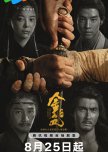
What is worth preserving in yourself when everything around you has a price?
Introspective and transcendental, with a subtle supernatural touch. A story that looks for something far more valuable than the gold at its centre: what remains of us when desire, survival, and circumstance put our values to the test.“In this life, is it better to die with wealth enough to rival a nation, or to die respected by others?” At the end of your life, what has greater value: what you possessed, or what kind of human being you were?
10/10 for the dialogue, directing, and performances.
The dialogue can be strangely dry and almost absurd at times. Conversations have a very mundane, human rhythm. The characters sound like a collection of peculiar individuals who happen to have ended up in the same desert rather than generic wuxia archetypes. I loved the conversational quality: exchanges feel like two people reacting to one another rather than actors waiting to deliver polished lines. You are expected to catch the tone, pause, facial expression or contradiction yourself. The dialogue and behaviour feel like real everyday life rather than something written for a drama. People hesitate, ramble a little, make ordinary comments or leave things unsaid. Small gestures and people not explaining themselves make the drama feel lived rather than performed. You get the impression that the camera has happened upon these people rather than that they’ve positioned themselves for a scene. Each one appears suspicious, and by the end of the drama, you finally understand who they truly are.
The location, voices, yellowish grading and even the very dark, naturally lit night scenes make the production feel very tangible. The real desert reinforces all of it. The wind, sand, sun and emptiness feel almost like another character rather than merely a picturesque background. The gold itself feels almost metaphorically like a seductive trap, while the endless desert becomes the grave of those consumed by greed.
The ending is beautifully open to interpretation. Whether the gold is literally there almost becomes secondary. Zhang Lu Yao sees it and can still ride away, unlike so many who were destroyed by their desire for it. Even more striking is Pu Ying. One of the purest characters, he has consistently refused the gold. In the final scene, he rolls down the dune and accidentally uncovers the ingots without even noticing them. The irony is beautiful: the man who never wanted the gold is the one who finally reveals it. He doesn't even need to reject it anymore; it has simply ceased to hold value in his inner world.
Throughout the story, people desperately search for gold and destroy themselves trying to find it. In the end, when nobody is searching, it quietly reveals itself to the person who wants it least.
Those who desperately sought the gold could not possess it. The man who never wanted it finds it without even knowing he has.
Was this review helpful to you?
Cute and funny.
I really enjoyed this series. I found myself smiling throughout each ep. Was i expecting a masterpiece no. and was this one, also no. but i would gladly rewatch this little series. It would be easily bingeable and one day i probably would re watch it.The actors had great OS chemistry (imo) and i do hope to see them work in a series down the line, whether it is as a duo once again or not. I would like to see Kimisawa Yuki in a more serious role. The man has me hooked.
Either way. give it a try. I had fun watching this and in the end isn't that what counts?
Was this review helpful to you?


