


This review may contain spoilers
Literal ragebait
stupidest writing I've ever seen, doesn't make any sense and scenes are just made to ragebait I swear to god.Acting failed to get me into the mood of the drama and I'm usually very patient with even the worst writing but after reaching episode 6 I dropped it.
Also the FL stylist needs to be fired her outfits did not match the scenes at all.
The dialogue was so weak I couldn't get invested and that lawyer? How is she leaking her past client's information and telling his ex girlfriend the details of his divorce that's grounds for her licence to be confiscated.
Genuinely pissed me off and I'm not the type to hate a drama and drop it this fast.
Was this review helpful to you?
So many episodes, so little plot.
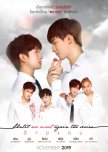
It's pretty rare to find a series that has more than 12 episodes and after reading comments about how well done this series is and how heartfelt it is I was thinking that this series must have a very deep and intricate plot so you can imagine my confusion when I started watching and it turns out that 70% of this series is just the main characters staring at each other. About midway I was hopeful that maybe the story would start to focus more on BounPrem's characters and maybe that's why there are so many episodes, but also no, we are only fed crumbs for the secondary couple (and yes I know they have their own spin-off series) while OhmFluke continue to just stare away at each other and occasionally start randomly crying.The plot here made absolutely no sense and that's because there very simply wasn't one. Even the past timeline that we are shown didn't make any sense. We are made to believe that Korn and In faced so much opposition and hardship that they gave up and killed themselves but literally no one besides the fathers were against their relationship. Everybody else in their lives was happy and supportive of them making the suicide seem rather dumb and pointless. Not to mention the dramatic tonal shifts between the present and past timelines were incredibly jarring. The past timeline has a rather serious tone to it, but the present timeline has random bgm and sound effects playing every single second making it come across as goofy and unserious. It might as well be two completely different shows.
Another thing I absolutely hated about this series were the intimacy scenes. Who's idea was it to have Fluke look like a terrified child while Ohm is kissing him? It wasn't cute or endearing, it looked like Dean was assaulting Pharm and to reinforce that Pharm never once had a say in any of their intimacy moments. Dean just decided for the both of them what they would be doing and when which was rather off putting. Intimacy is something that needs to be discussed between both parties involved and whether you're strangers or soulmates clear consent needs to be given before anything is initiated.
Now the few things I did like about this series... the acting was pretty good. Cooheart especially delivered a knockout performance and his chemistry with Kla was great. I really liked seeing them together, they were very cute. Honestly, this series would have been much better off if it had just been a historical drama that solely focused on Korn and In, they're relationship was way more interesting than Dean and Pharm's. Dean and Pharm's storyline could have been said and done in six episodes if all of the random filler had been cut out. With that being said though, I did enjoy the reincarnation story, I just wish it had been executed better. I liked that the reincarnation was actually talked about and the effect it had on Dean and Pharm and their families.
I'm sure in 2019 this series was absolutely mind blowing and I can appreciate that it set the stage for the fantasy/reincarnation genre, but in 2026 this series has become incredibly outdated. The storyline doesn't have enough emotional depth to really have an impact on the audience, it shows the suicide and then the rest is all rainbows and sunshine making the whole story come across as weak. Nowadays BLs aren't afraid to give us dark stories, talk about mental health, and really gut punch us with tragedies. There are far better series to watch unless you just really happen to love the slice of life genre and don't care about the plot being 70% filler nonsense.
General info for anyone wanting to know:
• Is the series spicy/nsfw? No.
• Is there a love triangle? In a very annoying way, yes, briefly.
• Is there violence/noncon? Yes, the series does show the full suicide scene. It doesn't censor or try to hide it in any way, it's in the very first episode and it's shown again multiple times throughout the series. The series also shows brief moments of violence between the fathers and sons.
• Is the spin-off Between Us worth watching? I'd say yes if you really liked the WinTeam crumbs you watched here. Their relationship imo is much better than DeanPharm and Between Us has a normal amount of episodes so the pacing is better.
Was this review helpful to you?
We Best Love: Fighting Mr. 2nd — Five Years, One Slap, and a Love That Never Really Left
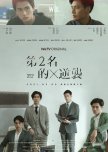
If "No. 1 For You" is about discovering first love, "Fighting Mr. 2nd" is about discovering what happens when love survives something the people inside it do not understand. The first season ended sweetly enough that the opening of Part 2 feels almost violent: five years have passed, Shu Yi walks into Shi De's workplace, sees the man he once loved and slaps him in front of everyone. My immediate reaction the first time was basically: "What the fuck happened?" That is exactly why the structure works. The drama does not immediately explain the missing years. It makes us experience the reunion before we know why Shu Yi is so furious, so the comfortable university romance from the first six episodes suddenly becomes an adult relationship poisoned by betrayal, resentment and information neither man possesses completely. The question is no longer whether they love each other. That is obvious from the amount of anger between them. The question is how two people who ended Part 1 believing in the same future managed to arrive five years later standing on opposite sides of a room as if one of them destroyed it.The slow reconstruction of those missing years is probably my favourite piece of writing in the entire series. Shi De went to America expecting a temporary separation, circumstances disrupted their communication, Shu Yi saw something he misunderstood, and then Shu Yi's father entered the situation and turned emotional confusion into a five-year test. He demanded that Shi De prove he could become worthy of his son through professional success while staying away, believing that he was protecting Shu Yi and perhaps also testing whether this relationship could survive outside youthful emotion. I hated his interference while loving what it added to the drama. He is not simply an evil homophobic father inserted to create conflict. His problem is control, class, expectation and his conviction that loving his son gives him the right to decide what kind of future is good enough for him. The revelation transforms the five-year separation because neither Shi De nor Shu Yi simply stopped loving the other. Their lives were manipulated by pride, misunderstanding and a parent who thought he understood his son's happiness better than his son did. When Shu Yi finally learns what happened, the entire opening slap changes meaning without becoming meaningless. The anger was real because the love underneath it never disappeared.
Sam Lin and YU are even better in this half because the characters have aged emotionally even if only a short time separated the two productions. The softness of university has been replaced by suits, offices, alcohol, responsibility and years of resentment, and both actors understand that the same couple cannot simply behave exactly as they did before. YU gets some of his strongest material as Shu Yi because anger is constantly competing with the desire to believe Shi De again. Sam has the harder emotional position in some ways because Shi De knows more than Shu Yi but cannot simply repair everything by telling him one fact. He made choices too, including accepting the father's condition without giving Shu Yi the agency to decide whether he wanted that sacrifice. That keeps the reconciliation from becoming "father bad, lovers innocent". Shi De loved Shu Yi but still made decisions for him, and Shu Yi's pain cannot disappear simply because those decisions came from love. Their chemistry becomes less about first attraction and more about whether intimacy can survive disappointment. The drunken confrontation, the anger, the physical closeness and the eventual return of trust work because Sam and YU never play hatred as the opposite of love. Shu Yi's fury is evidence of exactly how much of that love remained.
The ensemble evolves just as intelligently. The heterosexual side romance involving Zheng Wen and Yu Xin has largely completed its purpose, so Part 2 does not artificially drag them back simply because they were present before. Instead, the adult world opens more space for the queer relationships already surrounding Shi De and Shu Yi. Bing Wei and Zhe Yu are now together, turning what had existed around the edges of Part 1 into an established relationship, while Pei Shou Yi and Yu Zhen Xuan become one of the strangest and most interesting secondary stories in the series. Shou Yi's difficulty experiencing and expressing emotional attachment collides with Zhen Xuan's intense fixation on him, creating a relationship that is deliberately uncomfortable and far more psychologically complicated than the main romance. Their story never feels as though it was inserted merely because a BL needs another couple. It grows from Shou Yi, who was already present in Part 1, and gradually reveals why this apparently detached man carries his own unresolved history. Bing Wei and Zhe Yu provide something lighter and more stable around them, eventually reaching a proposal, so the series manages to contain several very different versions of love without making the supporting couples feel like copies of Shi De and Shu Yi.
That ensemble chemistry became even more enjoyable because the actors themselves clearly developed a real bond during the project. Later in 2021, "WBL Boys' Vacation" brought Sam Lin, YU, Ray Chang, Shih Chih-tian, Richard Lee and Evan Luo together away from the scripted roles, and seeing them talk, play and open up about themselves made it easier to understand why the group scenes in "We Best Love" felt so comfortable. I normally dislike using actors' real personalities to explain fictional relationships, because good acting should stand on its own, but in this case the companion reality show simply confirmed something already visible: these people had become comfortable enough with each other that the ensemble never felt assembled only for the camera. For several of them, "We Best Love" would remain an unusual or even singular BL entry in their careers, and I actually like that. They were actors playing a queer story rather than performers who needed to build a permanent BL identity around it.
The workplace material is perhaps the least emotionally powerful part for me, but even that serves a purpose. The merger, Alpha project, corporate sabotage and professional rivalry allow the story to demonstrate that five years have actually passed. These are no longer students whose greatest immediate problems involve swimming competitions and university friendships. Shi De has built a company partly under the shadow of the promise he made to Shu Yi's father, while Shu Yi has entered his father's business and carries the expectation of eventually succeeding him. Their careers therefore become another battlefield created by the separation. The corporate plot occasionally feels more functional than fascinating, but it allows the romance to exist within adult responsibilities rather than simply repeating the first season in office clothes. More importantly, it gives Shu Yi's father something concrete against which to judge Shi De, so the professional success is tied directly to the emotional conflict instead of existing as filler.
Final Thoughts
Taken together, the two parts of "We Best Love" form one of my favourite BL stories because Part 2 does not simply give me more of something I already liked. It changes the question. Part 1 asks whether Shu Yi can recognise that his lifelong rival has always loved him; Part 2 asks whether recognising love once is enough to protect it from pride, distance, family interference and terrible communication. The opening slap works because it destroys the security of the first ending, while the gradual explanation of the five missing years makes the audience reconstruct the relationship alongside Shu Yi. Sam Lin and YU carry that transition beautifully, the supporting couples remain genuinely worth watching, and Shu Yi's father becomes one of those frustrating characters whose interference makes me angry while also making the story much better. I have returned to these twelve episodes again and again since 2021, and they still work because the romance is not the only thing holding them together; the characters, side stories and ensemble are just as easy to revisit.
First love made Shi De and Shu Yi choose each other; five lost years proved that choosing someone once is never the same as learning how to keep them.
Was this review helpful to you?
We Best Love: No. 1 For You — Sometimes Losing First Place Is How You Find the Right Person
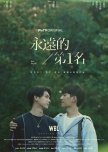
This review reflects how I experienced "We Best Love: No. 1 For You" in 2021. I am adding it to MDL much later, but I want to keep the perspective of the period in which I first watched it because this series has remained one of my favourite BL stories ever since. I have rewatched both parts several times almost every year, and the strange thing is that repetition has never made me tired of them. The first six episodes tell an extremely simple story: Zhou Shu Yi has spent most of his life furious because Gao Shi De always seems to beat him at everything. First in school, first in swimming, first whenever Shu Yi desperately wants to prove himself. College is supposed to finally free him from that rivalry, only for Shi De to appear again. What Shu Yi does not understand is that Shi De has never been competing because he wants to humiliate him. Being first was simply the only way he knew to remain somewhere Shu Yi would always notice him. That is such a wonderfully romantic reversal of the school-rival trope because the thing Shu Yi hates most about Shi De turns out to have been Shi De's clumsy way of loving him for years.What makes the first part work so well is that the romance grows from personality rather than from a complicated plot. Shu Yi is proud, competitive, emotionally transparent when angry and completely blind to what is happening when the emotion becomes love. Shi De is calmer and appears more controlled, but underneath that control is someone who has organised an absurd amount of his life around staying close to one person. The progression from irritation to friendship and then attraction feels surprisingly natural because the series gives their ordinary interactions as much importance as the confession. The swimming pool, the infirmary, studying together, jealousy, embarrassment and the moments where Shu Yi slowly realises that Shi De's absence bothers him more than Shi De's presence all build toward the same conclusion. By the time Shu Yi understands that Shi De loves him, the real question is no longer whether Shi De's feelings are reciprocated but how long Shu Yi will need to admit something the audience can already see. The script by Lin Pei Yu had the advantage of a writer who already understood Taiwanese BL through works such as "HIStory2: Right or Wrong", "HIStory2: Crossing the Line" and "HIStory3: Trapped", and that experience shows in how efficiently six short episodes can establish not only the main couple but an entire social circle around them.
Sam Lin and YU are a huge reason the story became so memorable for me. Sam was already an experienced performer, while "We Best Love" was YU's acting debut and first leading role, yet that difference never makes the pairing feel unbalanced. If anything, it helps. Shi De is supposed to appear more certain about his emotions because he has loved Shu Yi for years, while Shu Yi is discovering everything almost in real time. YU's slight rawness therefore suits the character beautifully. He can be arrogant one second, wounded the next and almost childishly confused when feelings stop following the rules he understands. Sam gives Shi De a quieter kind of intensity; his expressions often reveal much more than his dialogue, particularly when he is watching Shu Yi without being watched back. Their chemistry never feels as though the production is forcing two actors into romantic poses and hoping viewers will do the rest. They look comfortable enough to argue, touch, stare and eventually kiss without the physical relationship becoming some separate performance labelled "BL scene". That naturalness is especially important because most of the cast did not build their careers around repeatedly playing BL couples. They simply played these characters, and that helped the relationship feel like a romance rather than a genre exercise.
I also love that the side characters are not decorative. Fang Zheng Wen and Jiang Yu Xin could easily have existed only to make Shu Yi jealous or to delay the main relationship, but their own heterosexual romance is given enough space to feel like a genuine part of the same group. Shu Yi begins the series believing he is in love with Yu Xin, only to discover that she loves Zheng Wen, while Zheng Wen is caught between his feelings for her and loyalty to his friend. Liu Bing Wei and Shi Zhe Yu are present with their own dynamic, Pei Shou Yi is far more interesting than the standard school doctor who conveniently gives advice, and Shi De's family gives him a life outside Shu Yi. This is one of the reasons the series remains so easy for me to rewatch. I am not waiting impatiently for everyone else to disappear so the main couple can return. The friendships and secondary relationships make the world feel inhabited, and even when a storyline is small, it usually belongs there.
Technically, "No. 1 For You" is also much better than its modest six-episode format might suggest. Yoiisz International Media was still a very young production company and this was its first major drama project, so there was not an established BL catalogue proving what the studio could do beforehand. What mattered more was the experienced creative team around it, particularly director Chiang Jui-chih and Lin Pei Yu. The production understands water extremely well as a visual element, beginning with swimming and repeatedly using reflections, enclosed spaces and quiet close-ups to make the emotions feel larger than the actual scale of the series. The soundtrack also works particularly well because YU was already a musician before becoming an actor, and music becomes part of the identity of "We Best Love" rather than something pasted over scenes afterward. Nothing about the production needs to be enormous. It simply knows exactly what six episodes are supposed to accomplish.
Final Thoughts
"No. 1 For You" remains one of my favourite first-love BLs because it takes something incredibly simple and executes it with almost perfect emotional clarity. Two rivals discover that the competition between them has never meant the same thing to both people, one boy realises that the person he spent years trying to defeat was actually the person who had spent years trying to remain close to him, and an ensemble of friends makes their university world feel much larger than six episodes should allow. Sam Lin and YU are excellent together, the supporting stories matter, and the ending is genuinely sweet enough that, if this had been the whole story, I could have accepted it as a complete little romance. Fortunately, it was only half of it, because "We Best Love" had something much more painful waiting for us.
Sometimes the person you spend your whole life trying to beat is only running beside you because he never wanted to reach the finish line without you.
Was this review helpful to you?
This review may contain spoilers
Messy, Realistic, and Slightly Overhyped
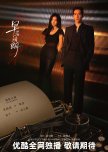
I enjoyed it, it’s entertaining, it’s easy to watch, and I do think it’s worth watching — but I also think it’s slightly overhyped. It doesn’t necessarily bring anything new to the table. There are a lot of classic office-romance tropes we’ve seen before. What makes it stand out, though, is the relationship itself and just how painfully realistic it is.This is NOT a green-flag romance where two perfect people meet, fall in love, communicate beautifully and live happily ever after. Absolutely not. These two are stubborn, complicated, insecure, selfish at times, terrible at communicating, and honestly just screwed up. And I actually praise the drama for that because their relationship felt like one of the more realistic relationships I’ve seen in a drama. Relationships like this exist. They’re messy, unhealthy in certain ways, but also filled with genuine feelings.
I kept seeing people trying to decide who was at fault and especially putting everything on the male lead and calling him the red flag, but I really don’t agree. Both of them were at fault. If anything, I sometimes found her to be the bigger grey flag.
Yes, he had his issues, but he genuinely loved her. He wasn’t ashamed of her. He was willing to introduce her to his friends, include her in his life, take her out, and be seen with her. She was the one constantly hiding him. Even her best friend didn’t know about him. After SIX YEARS, he basically still felt like her secret hookup.
And that’s another thing — sometimes they really didn’t give me the vibes of two people who had been together for six years.
Their biggest enemy wasn’t even another person. It was COMMUNICATION.
The amount of problems that could’ve been solved if these two had just sat down and TALKED was insane. They kept lying, hiding things, suppressing their feelings, assuming things about each other and not trusting each other. It became exhausting. Literally one episode suffering, one episode happy, then back to suffering again. The chemistry was absolutely there, but the constant push-and-pull eventually started draining me.
At the same time, that’s exactly why I can’t completely criticize the relationship. It was frustrating because it was realistic. The drama didn’t whitewash either character or try to pretend that love magically makes people emotionally healthy.
Now… Jing Boran.
Let’s be serious. He is largely one of the reasons this drama became as popular as it did. His presence, styling, hair, charisma — the man was RADIATING aura. Some of those outfits were absolutely ridiculous for an office, but he looked fantastic. He ATE this role.
I already loved him before this drama, so I wasn’t necessarily shocked by his charm because I expected him to be good in this kind of romance. I actually think people discovering him through this drama probably had a much bigger WOW reaction than I did. At times, I even felt like I was watching Jing Boran rather than Luke because so much of his own charm came through.
But chapeau bas to that breakup yearning scene. My God. When he cried over their breakup??? GOLD. The heartbreak, the yearning, the acting — absolutely beautiful. Our yearning man DELIVERED.
Song Chan also did a really good job, especially during the earlier part of the drama. She suited that shy, obedient, somewhat broken version of the character incredibly well. Once her character became stronger and started standing on her own feet, I personally didn’t think her performance was quite on par with his anymore, but I still really enjoyed watching her character grow.
Outside of the romance, the storyline itself is nice. The cinematography is beautiful, the OST is amazing, there are some genuinely beautiful quotes throughout, and their scenes together are very well made. It wasn’t addictive for me, but I was never really bored either.
One thing I REALLY didn’t expect to affect me was the flatmate’s death.
I wasn’t even particularly attached to his character, yet his story absolutely broke me. The more I thought about it, the more emotional I became. It carried such a painful message about life, and I really wish the drama had used his death more strongly as a turning point for her. I don’t think they invested enough in the aftermath considering how meaningful that moment could’ve been. Still, it was one of the most unexpectedly heartbreaking parts of the drama for me.
My biggest disappointment, however, is definitely the ending.
The last four episodes were way too rushed. You can really feel that things were cut because so many scenes end before they have room to breathe. After spending SO much time watching these two suffer, misunderstand each other, break apart, push and pull and go around in circles, I desperately wanted more time with them finally getting together and learning how to have an actual healthy relationship.
We barely got that payoff.
I wanted to see them TALK. I wanted to see how they function once they’re finally honest with each other. I wanted to actually enjoy them being together after spending an entire drama being exhausted by them. Instead, everything happened so quickly that the ending left me feeling strangely empty.
Overall, The Early Spring is enjoyable and worth watching, but I wouldn’t personally call it something groundbreaking. Its strength isn’t that it gives us a new story; it’s that it gives us an unusually messy and realistic relationship without trying to make either person perfect.
It’s frustrating. It’s entertaining. It’s romantic. It’s exhausting. Sometimes you want to lock these two in a room and force them to communicate.
But maybe that’s exactly why it worked.
Was this review helpful to you?
A Winter Sun Wakes the Wind in Spring Hills' Dream
0 people found this review helpful
Take me back
"Molie has a commanding presence, much like Changyang.Xi Gun has an enchanting floral scent, like my brother."
"Great Snow Mountain is like you."
...
"To reach Great Snow Mountain, one must pass through Dongguo. The flavor of Dongguo tea is quite like you."
I haven't felt this way since I finished The Untamed, to like a series so much, yet to break my heart.
I'm glad I didn't give up after the first few episodes and that I was able to accept that not everything has to make clear sense. It’s an amazing series, but certain details get lost, leaving the viewer with questions.
We’re not talking about episode 13.
I don’t want to accept it yet.
Was this review helpful to you?
Unfortunately Knot did not knot well
What a snoozefest!•Storyline: Existent-ly non-existent. But the Omegaverse part was handled very well, like practically and theoretically approved!
•Acting: BoatOat's acting was very convincing as True Alpha and Pure Omega. Especially Oat as Phatsa, a newly discovered Omega was brilliantly done! His conflicted emotions were portrayed very well. I found his performance extraordinary. But overall, everyone's acting was not bad, also not good either.
•Pacing: THE MOST PROBLEMATIC PART of this drama. It was all over the place and inconsistent.
•Cinematography: If you have watched My Stubborn, you can definitely tell that MFlow got more funds to produce this than My Stubborn. Their cinematography, lighting and filters made the scenes look pretty but what to do if the storyline is lacking in itself.
•Music: okay, okay, I'll be a little biased towards Boat's voice because that OST, "Bonding" was beautifully sang. It was melodious and soulful. Also as an avid listener of ambient music I found the background music really calming.
Overall, it was really disappointing to me as I only watched and finished it because of my love for BoatOat and sometimes it was REALLY painful to go through the whole episode because it felt like a chore. My Stubborn was watchable and enjoyable but this was outright boring. I hope they select scripts wisely from the next time. Because, sorry BoatOat, your sizzling chemistry and dedicated presence was not enough.
P. S: Watching this made me question my life choices. I didn't want to drop it because of BoatOat and my sheer curiosity. And yet I found myself asking every Tuesday, "What the hell am I doing with my life?"
Was this review helpful to you?
Connecting to You — When a Familiar Thread Still Leads Somewhere New
Are visible threads becoming the new supernatural shortcut for romance? Perhaps. The idea itself certainly isn't new. East Asian stories have been playing with the red thread of fate for generations, and recent dramas have increasingly found ways to make invisible emotional connections physically visible. So when "Connecting to You" introduced Chia-Kai, a young man who can see coloured threads connecting people according to love, friendship, family or hostility, I was not exactly amazed by the concept itself. They could probably have replaced the threads with colours around people's souls and created something equally workable. What made the series interesting was what it did after introducing the gimmick. Chia-Kai can see everybody else's connections but has none of his own, until police officer Da-Wei appears and an unfamiliar silver thread suddenly connects them. From there, the supernatural ability becomes part romance, part comedy and part investigative tool, giving the series an identity beyond simply waiting for the silver line to become romantic red. The source is a BL web novel by Beck, and the television project had actually been in development for years before reaching the screen, appearing in both the Busan Story Market and the Golden Horse project market. That preparation shows because the fantasy rules, police material and romance feel like parts of the same drama rather than three ideas accidentally pushed together.Bruce Chiu Yi-Tai and Liu Yu Ren are probably what made me enjoy it as much as I did. They are absolutely adorable without looking as though somebody selected them from a catalogue labelled "BL top" and "BL bottom". That is something I repeatedly appreciate about Taiwanese BL. Of course different characters have different personalities, bodies and sexual dynamics, but I rarely feel that Taiwanese productions are desperately instructing me to categorise the couple according to who is supposed to dominate whom. Chia-Kai and Da-Wei could simply be two men who become important to one another. Their attraction grows through personality, curiosity, irritation, trust and the strange connection between them rather than through one actor being coded as overwhelmingly masculine while the other is deliberately made fragile. It allows me to focus on why these particular people connect instead of wondering which familiar BL archetype each actor has been assigned. Bruce gives Chia-Kai the right combination of loneliness and eccentricity because someone who has spent his entire life literally seeing everybody else's relationships while remaining "threadless" could easily become either unbearably tragic or ridiculously quirky. He finds a balance between the two. Liu Yu Ren gives Da-Wei enough scepticism to make their early interactions funny without turning him into the predictable emotionally constipated policeman who spends half the series pretending he feels nothing. Their chemistry is soft, easy and very Taiwanese in the best way.
The coloured-thread system also becomes more effective than I initially expected because it gives the story a way to talk about relationships without reducing connection to romance. Red is not the only colour that matters. Family, friendship and even hostility create bonds, while the thickness and appearance of those connections can reveal something people themselves may not want to admit. Chia-Kai therefore possesses an extraordinary advantage and an emotional curse at the same time. Everyone around him is visibly attached to somebody, while he has grown up believing there is apparently nothing connecting him to anyone. The silver thread with Da-Wei matters not simply because it might eventually mean "boyfriend", but because for the first time Chia-Kai has visible proof that another human being is connected to him at all. That makes the romance sweeter because love is not arriving to replace an empty colour with red; it grows through friendship, companionship and the gradual discovery that a bond can change. Using Chia-Kai's ability during investigations was also a smart choice because otherwise the supernatural premise could have become nothing more than a romantic detector. The police setting gives the ability practical consequences and keeps the episodes moving whenever the romantic storyline needs time to develop.
This is also why I continue to enjoy Taiwanese BL so much. Some of my favourites in the genre are Taiwanese, including "We Best Love", "HIStory3: Trapped" and "Secret Lover", and although "Connecting to You" does not enter that top group for me, it shares something I value in many of them. Taiwanese BL frequently feels comfortable being a drama first and a BL at the same time. A police story can remain a police story, a workplace drama can care about work, family members can have lives beyond opposing the romance, and the central couple is allowed to exist without every scene being designed around shipping. Even when the premise is supernatural, the emotions remain surprisingly ordinary. That gives many of these dramas a timeless quality for me. I can return years later without feeling that I am watching something built entirely around whatever BL trend happened to be fashionable during its release. "Connecting to You" is not revolutionary, but it understands that an original story does not require an original ingredient in every single place. A familiar red-thread concept can still produce something distinctive when the characters, rules and surrounding world have enough personality.
The production itself deserves credit for that cohesion. Director Yu Jhi-han had worked in film and queer storytelling before this, but "Connecting to You" was his first television series, and the project had already passed through serious industry-development spaces before production. Force Films does not have a large enough BL catalogue for me to declare that it has some proven formula for the genre, although it had previously worked with Yu on the queer short "Gentleman Spa". What I can judge is what ended up on screen: the series looks controlled, the supernatural visual language is clear without becoming childish, the investigative material never overwhelms the romance, and the relatively compact episodes rarely feel padded simply to reach a broadcast length. The supporting characters also make the world feel inhabited instead of existing solely to push Chia-Kai and Da-Wei together. That balance matters because the easiest version of this story would have been twelve episodes of "What colour is our thread now?" Fortunately, the drama has more curiosity than that.
Final Thoughts
"Connecting to You" did not give me one of my all-time favourite Taiwanese BLs, but it gave me exactly the kind of series I can imagine happily watching again. The central idea was familiar, yet the colour system, investigative element and emotional meaning of Chia-Kai finally developing a connection of his own gave it enough originality to stand apart. Bruce Chiu and Liu Yu Ren were charming together, their relationship never needed exaggerated dominant/submissive coding to make the attraction understandable, and the drama trusted the connection itself to carry the romance. Taiwan continues to remind me that a BL does not have to reinvent love to feel fresh; sometimes it simply has to understand why these two people, in this particular story, belong together.
Fate may draw the first line between two people, but what makes it worth following is everything they choose to build along it.
Was this review helpful to you?

Silly, wholesome fun and friendship goals
There is not much of a story here, but it is so cute and fun that it will definitely became a total comfort watch. The romances are cute, but it is the group friendship that totally carries this series. If you want something heartwarming that will make you smile with happiness at the end of a hard day, this is the show to do it.Was this review helpful to you?
A mess
At first I thought it was a weird script. Then weird editing. But no, this show was just a mess from beginning to end. It felt like a class project rather than a professional TV show. Awkward blocking, clunky dialogue, random characters appearing and vanishing. The "plot" was less than paper thin. Repeated conversations that went on and on. A wide angle lens for every shot whether it needed one or not. I wish Boat & Oat a sparkling career, but everyone who had decision-making power on this show and went "well, that's as good as it's going to be" and let it go to air needs to seriously reconsider their profession.Was this review helpful to you?

Oh Thai Girl! Pull at the General's Heartstrings
0 people found this review helpful
This review may contain spoilers
Looks interesting but getting weaken in the middle.
I watched this when this was released because the actress is Thai and i watched Jin Xuanxu for the first time. I'ts basically my first impression of them.The opening scene shows a general fighting on the battlefield, while FL descends from the sky. From her perspective, she's a Thai internet celebrity livestreaming in Thailand. During a thunderstorm, she takes shelter in a temple and discovers a painting of a general on the temple wall. The dragon pattern on his clothes is exactly the same as the dragon pattern on her ancestral handkerchief.
This opening is quite captivating, keeping me watching a bit longer. The drama is short, 1 hour 48 minute. I've seen so many time-travel dramas, but this one is quite rare – FL tells ML right away that she was struck by lightning, which is unusual. Although ML doesn't immediately believe her, she tells him she wants to go back, wants her phone, and wants to watch dramas. All the fighting and killing here is scary; this female lead is incredibly persistent in finding a way home, single-mindedly focused on returning.She speaks quite good Chinese when she first transmigrates to ancient times . The heroine wears Thai clothes most of the time, but she also wears several sets of Chinese ancient costumes.
The plot development is so-so, and it's not very attractive towards the end. I don't want to continue watching.
Although the two are handsome and beautiful- main lead styling are on-point, I feel a little unable to ship them since they didn't have any dynamic duo and feel disconnected. Maybe it's for hardcore fans.
Was this review helpful to you?
Maybe for once you will learn not to rate like a fan, but to rate realistically!
No matter how much you pre-rate each episode with 10 without even watching it, I will also rate them with 1 without having watched them. Unreal, but for something like this 10 is pure nonsense!
Maybe for once you will learn not to rate like a fan, but to rate realistically!
No matter how much you pre-rate each episode with 10 without even watching it, I will also rate them with 1 without having watched them. Unreal, but for something like this 10 is pure nonsense!
Maybe for once you will learn not to rate like a fan, but to rate realistically!
Was this review helpful to you?

This review may contain spoilers
Very well written story and very relatable characters !
I enjoyed this drama very much because, compared to the average k-Dramas:-IT DOES NOT have impossible coincidences in order to create artificially suspenseful or dramatic situations; there still are some coincidences, like both leads having mothers who left them, or all the 3 friends crashing together at the same time at Tae-O's house, but those are acceptable since they don't affect the principal love story in a fundamental way.
- THERE ARE NOT unbelievable or just stupid dialogues or acting decisions, like you find in many dramas and shout at the TV "Why did you do/say this, STUPID?", whose purposes generally are to extend the action artificially
- THERE ARE NOT discontinuities or inconsistencies between episodes or seasons, to give you the impressions there are multiple writers who don't know about one another.
All in all, I liked very much that the action between the 3 main leads is very believable and all 3 are very relatable and their love story develops naturally. Everything that happens CAN happen in real life, but it is beautifully written and acted, and thus worth watching. They all make mistakes that everybody can make, especially for the first love. The way Tae-O and then Song-i gradually discover their feelings, and how Do-Hyeon understands this and "lets her go" are also well acted. I thought there will be a conflict between he two MLs, especially after Do-Hyeon says "I am confident she will choose me" but, this situation is resolved peacefully - yes, that means Do-Hyeon is much more mature than Tae-O, but this also is a good thing to have on the show. All characters have distinct personalities which are well put into acting.
Still, I liked Tae-O's character very much, there is nothing wrong he did from the perspective of an inexperienced teenager who witnessed 2 potential rejections from Song-I: first in hi school just before he scene when they "fight" in the rain, and then later when he asks her on the rooftop "The mysterious guy that you like, is it me?" and she says clearly no.
Also, I strongly disagree with those who pity Do-Hyeon for losing the girl, despite being the hard-working and charming and mature guy: at the beginning, HE HIDES the fact that he is dating Song-i from Tae-o who is his friend. Why would he do this? I believe it is because he knows/feels that Tae-o has SOME feelings for his longtime childhood friend. If there were any other girl he would have told Tae-O. So he knows he is taking a risk by starting this relationship.
Also he participates in Song-I's eviction at the beginning, which of course is a coincidence, but it is an ominous memory for her to start with. Or, when he doesn't respond to Song-I's call for help from the Observatory, it is not because he is working, but because he lets his phone unattended, which is a mistake. And his shouting at her when he is jealous. All these details were probably introduced by the writers in order to demote the character a little, and make him less perfect. Unlike other dramas where there comes a perfect, ideal, fantastic hero who easily snatches the girl away from the childhood friend, no questions asked.
The only quirk is that the 3 characters, being in the last year of college, are too old for first loves and first kisses. They could have moved the story to a high school environment. Also, the characters Ga-Rin and Hoon are exaggerated and silly but, for some reason, I kinda found them cute, maybe because of Ga-Rin's smile.
All in all, I loved that drama, especially after watching dozens of K-dramas and J-Dramas which most have major plotholes and unbelievable developments and/or endings, all for the sake of challenging the viewer and keeping him in a state of elevated excitement.
Was this review helpful to you?

Your Summer, My Storm — A Beautiful First Love That Forgot to End
Casting Fukada Ryusei and Ukisho Hidaka opposite each other was an obvious and very clever idea. They are both members of ACEes, this was their first acting project together as members of the group, and ACEes even performed the theme song. Of course fans were going to be curious about seeing two members transformed into a romantic pairing on screen, and there is absolutely nothing wrong with using that existing connection to attract an audience. In fact, it gives the actors something useful from the beginning: familiarity. Fukada and Ukisho already know one another, so Natsuki and Sota never suffer from the stiffness that sometimes appears when two actors are suddenly asked to create intimacy in a short Japanese romance. Their interactions feel relaxed, playful and comfortable, which works particularly well for a story about a first love developing almost accidentally. The problem with building a drama around that kind of pairing is that the story eventually has to become more important than the novelty of seeing the two idols together. For most of its ten episodes, "Your Summer, My Storm" manages that very well. Then the ending stops just before it has to make the most important decision.The story itself is simple but charming. Natsuki is a high-school student approaching university entrance exams with terrible results, no clear direction and the emotional damage of recently being dumped by his girlfriend. Sota arrives as his tutor and, supposedly, his sister's boyfriend, making him the worst possible person for Natsuki to fall for. What starts as irritation slowly becomes admiration, attraction and eventually the confusing experience of discovering that his first serious love may be another man. I liked that the drama never needed to turn that discovery into a huge identity crisis. Natsuki is confused because he is falling for Sota, not because the screenplay decides homosexuality must automatically become tragedy. The family story is equally important because Natsuki's future, his parents' expectations, his sister and the increasingly obvious relationship developing under the same roof all become part of the same summer. Even the academic storyline has a purpose: Sota does not simply become someone Natsuki wants romantically; he helps Natsuki discover that he is interested in clouds, weather and meteorology, while Sota himself already has a dream connected to architecture and bridges. Their relationship therefore develops alongside the question every young person eventually faces: what kind of life do I actually want?
Fukada works particularly well because Natsuki needs to feel emotionally transparent. His embarrassment, jealousy and confusion are rarely hidden very successfully, which makes the character cute without turning him into an idiot. Ukisho has the more difficult role because Sota initially appears almost impossibly perfect: attractive, intelligent, patient, good with the family and capable of teaching Natsuki without humiliating him. The script gradually gives him enough uncertainty to stop him becoming merely a fantasy boyfriend, and Ukisho's experience helps. Their chemistry is gentle rather than explosive, but that suits the series. I never needed an explicit scene or even a dramatic kiss to believe that something important had happened between them. What mattered was the accumulation of little things: studying together, attention becoming more personal, the way Natsuki begins looking at Sota differently and the way Sota slowly understands that his own attachment is no longer simply that of a tutor or family friend. The supporting cast also gives the drama warmth because "Your Summer, My Storm" is as much a family comedy as a BL, and that prevents the romance from existing inside an artificial bubble.
Where the drama lost me was the finale. Sota announces that he is leaving for the UK for two years to pursue the future he has always wanted. Natsuki, who has finally begun finding his own direction, moves toward university and meteorology. They remain connected, their feelings are clear, and technically there is nothing tragic about what happens. Yet I finished the episode thinking: is that really it? The ending does not feel like a strong promise of a second season, because nothing dramatic is left hanging enough to make me desperate for another chapter. But it also does not close the first season decisively enough to make the separation itself emotionally meaningful. It sits somewhere in the middle, and that is the least satisfying place an ending can be. An open ending can be beautiful when ambiguity is the point; here, I felt as though the story simply stopped while the relationship was still waiting for its final sentence.
What frustrates me is that either direction could have produced a much stronger conclusion. I would actually have accepted a sad ending. First love does not always become a relationship, and sometimes the love we remember most intensely is precisely the one that never had enough time to become ordinary. Sota could have left, Natsuki could have understood that this summer changed him forever, and the story could have ended with the painful acceptance that some people arrive in our lives mainly to awaken something before disappearing again. That would have hurt, but it would have meant something. The opposite ending could have worked just as well: allow time to pass, let Natsuki's new ambition push him farther academically, and eventually reunite them abroad. Sota helped a boy with no direction discover a future; imagine Natsuki eventually reaching that future partly because loving someone made him want to become more than the student who once needed a tutor. That would have transformed their romance into motivation rather than simply memory. Either ending would have completed the emotional logic already present in the story.
The unfinished feeling is particularly surprising because this was not an inexperienced little web production trying to find its feet. "Your Summer, My Storm" was an original TV Asahi drama produced with Storm Labels and Fine Entertainment, with Yuko Matsuda writing the screenplay and an experienced directing team behind it. Matsuda has worked in Japanese television for decades, including major mainstream dramas, so the light family-comedy structure and accessible emotional rhythm make sense. Fukada was taking on his first solo lead in a continuous drama, while Ukisho already had considerably more acting experience, and the production surrounded them with established adult actors rather than expecting two idols to carry everything alone. Technically, the series looks exactly as competent as that background suggests. The problem is therefore not lack of professionalism. It is a creative decision. The writers seem to have wanted something soft, youthful and hopeful, where first love changes both boys without requiring them to make permanent promises at eighteen and university age. I understand the intention. I simply think softness still requires conclusion.
Final Thoughts
"Your Summer, My Storm" was a warm, attractive and genuinely enjoyable first-love drama, and pairing Fukada Ryusei with fellow ACEes member Ukisho Hidaka proved to be much more than simple fan service. Their existing comfort helped create a believable relationship, while the story connected romance with family, education and the frightening moment when young people have to decide what comes after school. I did not need a kiss, sex or a conventional boyfriend declaration to validate what existed between Natsuki and Sota. I only needed the finale to decide what that love meant when summer ended. A tragic goodbye could have been beautiful. A future reunion could have been beautiful. Instead, the series chose an open door without giving me a strong reason to either walk through it or close it behind them.
Some first loves are meant to last, others are meant to become memories—but the most frustrating ones are those whose story ends before we know which they were.
Was this review helpful to you?

Was this review helpful to you?


